

Interested in joining the ECCo committee? Find out more here
Meet the Early Career Colloid committee:
Chair
Dr Priyanka Dey
University of Portsmouth
Research Interests: Colloidal plasmonic gold nano-assemblies and Raman spectroscopic cancer diagnosis

Dr Priyanka Dey is currently a Senior Lecturer in Bioanalytical Chemistry at University of Portsmouth, UK. She attained her Ph.D. in chemistry specialising in colloidal nanotechnology and optical spectroscopy, from Queensland University of Technology, Australia. Since then, her research has been directed toward designing hybrid plasmonic-polymeric nano-assemblies and developing analytical spectroscopic solutions for disease diagnosis. This has included work in enhanced Raman scattering (SERS and SESORS) in Australia and UK, nanoplasmonics and photonics in Germany and optical nanobiosensors for clinical and point-of-care devices in Spain. She has years of experience in the ever-growing domain of novel nanoplasmonics using cutting-edge enhanced optical spectroscopic solutions especially, Raman spectroscopy for clinical diagnostic needs. She loves teaching about materials and analytical chemistry and has been active in public speaking like Soapbox science UK.
Secretary
Dr Gregory Smith
ISIS Neutron and Muon Source
Research Interests: Self-assembled systems
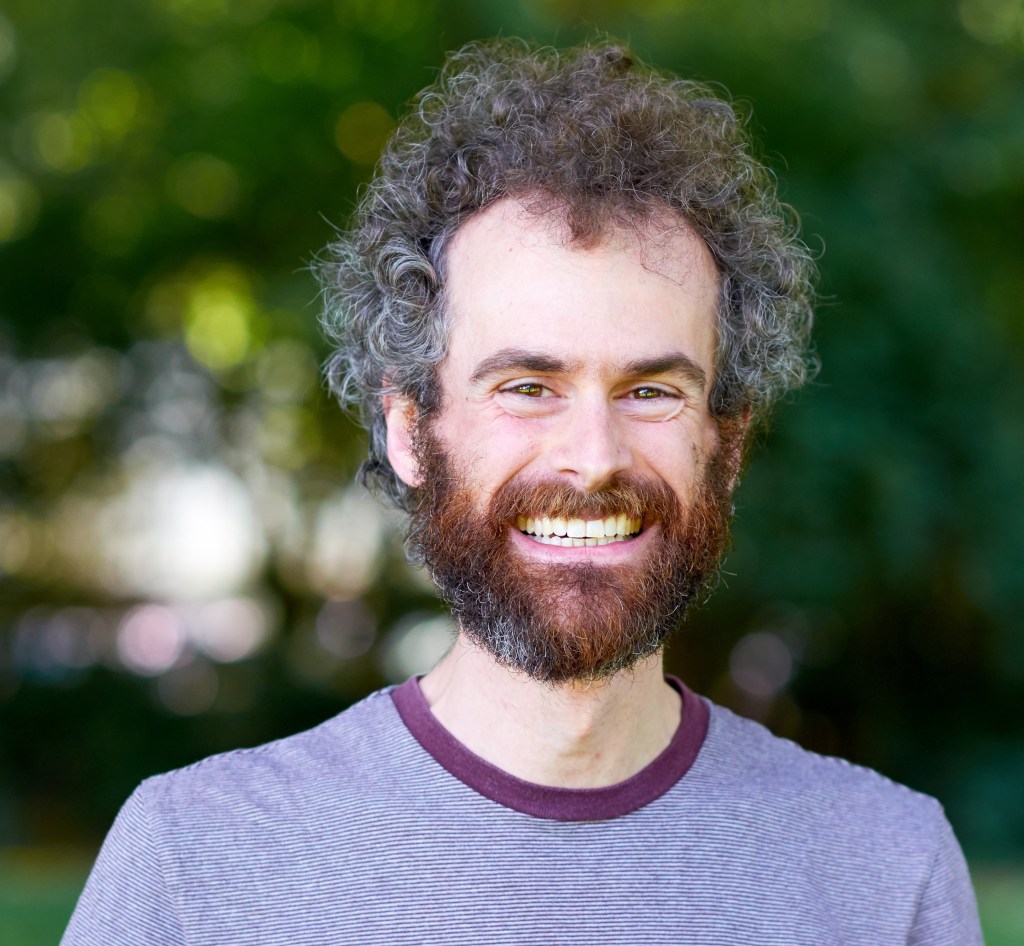
Gregory Smith is currently an instrument scientist in the SANS Group at the ISIS Neutron and Muon Source. He received a PhD in chemistry from the University of Bristol in May 2015, where he worked in the School of Chemistry’s colloids group. He followed this by positions at the University of Sheffield (Chemistry) and the University of Copenhagen (Niels Bohr Institute), before starting at ISIS in 2020. At ISIS, Gregory is joint responsible for Larmor, a flexible instrument optimised for developing Larmor precession techniques. The instrument can be operated in many modes, and Gregory is primarily involved in its use as a conventional or polarised small-angle neutron scattering (SANS) instrument as well as a time-of-flight spin-echo SANS (SESANS) instrument. The latter is a technique that extends the length scales that be studied up to micrometres. These techniques are very well studied to studying colloids, and Gregory continues his research interest in studying self-assembly, such as surfactants or polymers or nanoparticles, across many length scales as well as using scattering and isotopic labelling to understand their complex structure.
Treasurer
Dr Sam Aspinall
University of Hertfordshire
Research Interests: Nanoparticles for oral drug delivery
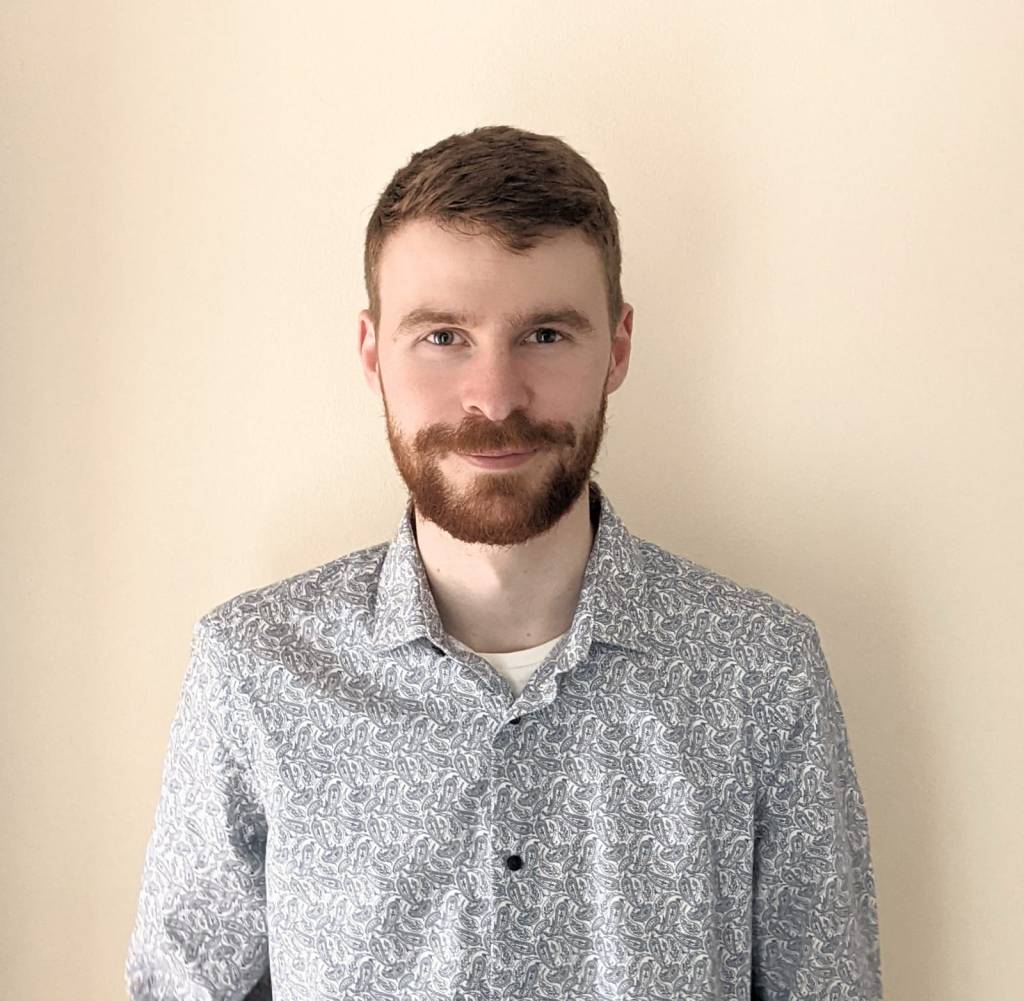
Sam obtained his master degree in Chemistry in 2016 then his PhD in Pharmacy in 2022 from the University of Reading. His PhD focused on the development of novel pharmaceutical formulations for the delivery and controlled release of active ingredients to the oral cavity and the synthesis and incorporation of nanoparticles into pastes with increased retention on mucosal surfaces. In 2022 he was appointed lecturer of pharmaceutics in the School of Life and Medical Sciences at the University of Hertfordshire. His current research focuses on the development of thermoresponsive and mucoadhesive coated nanoparticles for use in oral and nasal formulations.
Social Media Manager
Dr James Hallett
University of Reading
Research interests: Self-assembly, scattering and liquid structure
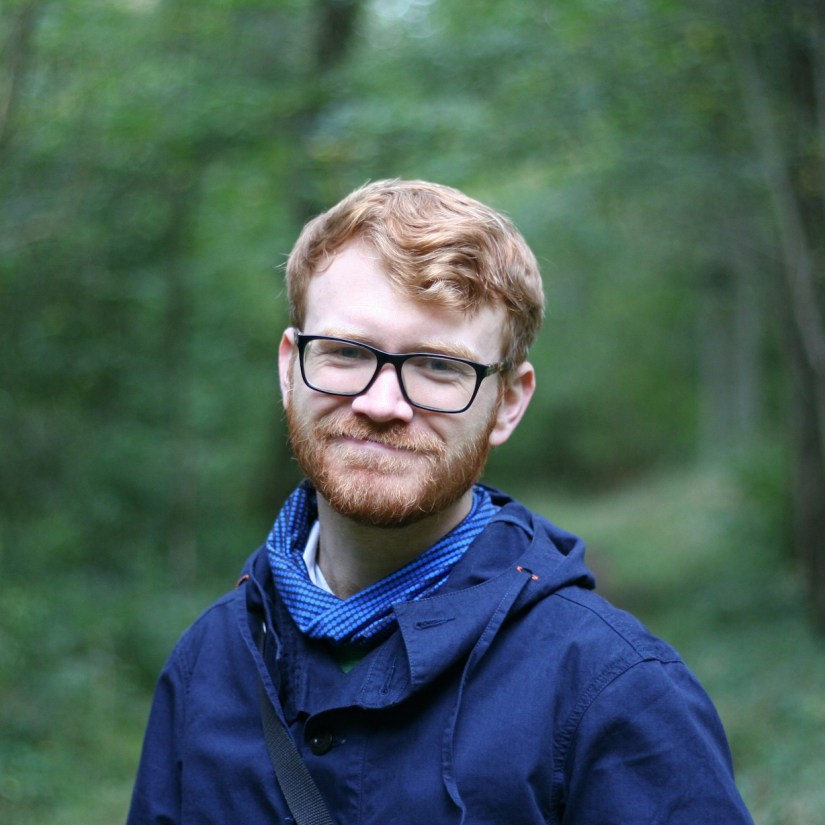
James was appointed as a Lecturer in Physical Chemistry at the University of Reading in November 2021. My current research utilises X-ray scattering and Langmuir-Blodgett measurements to understand solute-lipid interactions. Prior to this he was a Stipendiary Lecturer in Physical Chemistry for Trinity College Oxford and postdoctoral researcher working in the group of Professor Susan Perkin (University of Oxford, Physical and Theoretical Chemistry), starting in February 2018. While working in the group of Professor Perkin he used surface force analysis to study the structure of concentrated electrolytes. From 2015 to 2018 he was a postdoctoral researcher in the group of Professor Paddy Royall at The University of Bristol using dense suspensions of nanoparticles to study the phenomenology of vitrification and gelation.
From 2010 to 2014 he undertook his PhD studies under the supervision of Professors Paul Bartlett and Robert Richardson at the University of Bristol, studying colloidal and liquid crystal systems for energy-efficient display applications.
Website Manger
Dr Clare Rees-Zimmerman
University of Bath
Research Interests: Phoretic motion, particle interactions and drying films
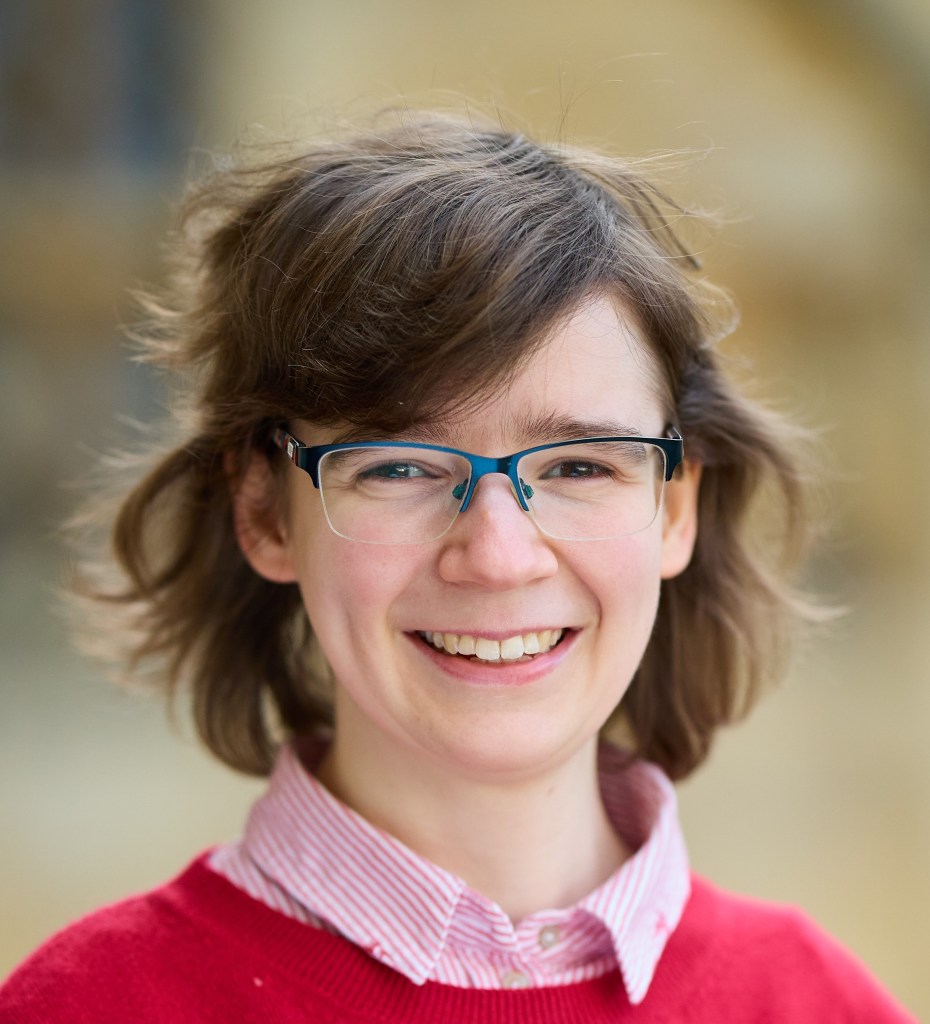
Clare is a chemical engineer by training, completing her undergraduate (integrated Masters) and PhD degrees at the University of Cambridge. For her MEng project, she modelled the patterns formed by blood spots during drying, under the supervision of Prof. Alex Routh. The project is important for developing accurate paper diagnostics using blood spots. She also undertook a number of industrial summer internships, including in R&D at Procter & Gamble. Clare’s PhD work examined how a mixture of differently sized particles self assembles in a thin film as it dries. For this work, she won the 2023 Lighthill-Thwaites Prize from the Institute of Mathematics and its Applications (IMA), along with the 2023 Katharine Burr Blodgett PhD Award from the RSC/SCI Joint Colloids Group. Clare joined Christ Church, University of Oxford, as a Junior Research Fellow in October 2022. There, she was hosted by the Oxford Colloid group, run by Prof. Dirk Aarts, based in the Department of Chemistry. In January 2026, she started as a Lecturer in Chemical Engineering at the University of Bath. Her current research addresses the need to make functional materials more sustainable, by using less of the expensive components, but still delivering the required properties.
Industry Liaison
Dr Bin Yang
AstraZeneca

Dr. Bin Yang obtained a PhD in Physical Chemistry from University of Bath, and is a Chartered Chemist with the Royal Society of Chemistry. She is currently an Associate Principal Scientist in the Pharmaceutical Science Department at AstraZeneca. Her current focus areas include preclinical drug formulation and drug delivery technologies, where she serves as a project technical leader for both small drug molecules and biomacromolecules mainly in the preclinical phase. Dr. Yang has over 18 years of research experience in pharmaceutical sciences, encompassing drug product development, drug delivery, external technology evaluation, and project management. Before joining AstraZeneca, she has worked for academic institutes across UK and France, on a broad range of topics in the research areas of: soft matter, macromolecular self-assembly, colloidal science, functional nanomaterials, drug delivery and biophysical characterisation. She holds approximately 30 patents and publications. Dr. Yang has successfully secured research funding from universities and prestigious bodies, including the Engineering and Physical Sciences Research Council (EPSRC), Biotechnology and Biological Sciences Research Council (BBSRC) and Science and Technology Facilities Council (STFC).
General Members
Dr Naval Singh
Lancaster University
Alumni ECCo committee members
Chloe Verity (Lubrizol Limited)
Dr Ed Johnson (University of Sheffield)
Dr Saul Hunter (University of Lincoln)
Dr Yang Lan (University College London)
Dr Guido Bolognesi (University College London)
Dr Spyridon Varlas (University of Sheffield)
Dr David Growney (Lubrizol Limited)
Dr Tim Snow (Diamond Light Source)
Dr Michael Cook (University of Hertfordshire)
Dr Ben Cheesman (Aqdot Limited)
Dr Lee Fielding (University of Manchester)
Dr Fiona Hatton (Loughborough University)
Dr Nacho Martin-Fabiani (Loughborough University)
Dr Kirsty Stark (Aphea.Bio)
Dr Gemma-Louise Davies (University of Birmingham) (founding member)
 eccolloid.co.uk